
Where My Birds Come From
Every bird I paint has an oversized beak and a bright ring of colour around each eye. That isn’t a style I arrived at on my own. It’s inherited.
My grandfather was a jazz drummer who painted birds
His name was Dave Coleman. He was born in Pasadena in 1923 and was drumming on his mother’s pots and pans by the time he was two. He went professional straight out of high school and spent the 1940s playing with Freddie Slack, Red Nichols and Harry James, and turning up in Hollywood pictures along the way. Over his career he played with Count Basie, Billie Holiday, Ella Fitzgerald, Frank Sinatra, Stan Getz and Chet Baker.
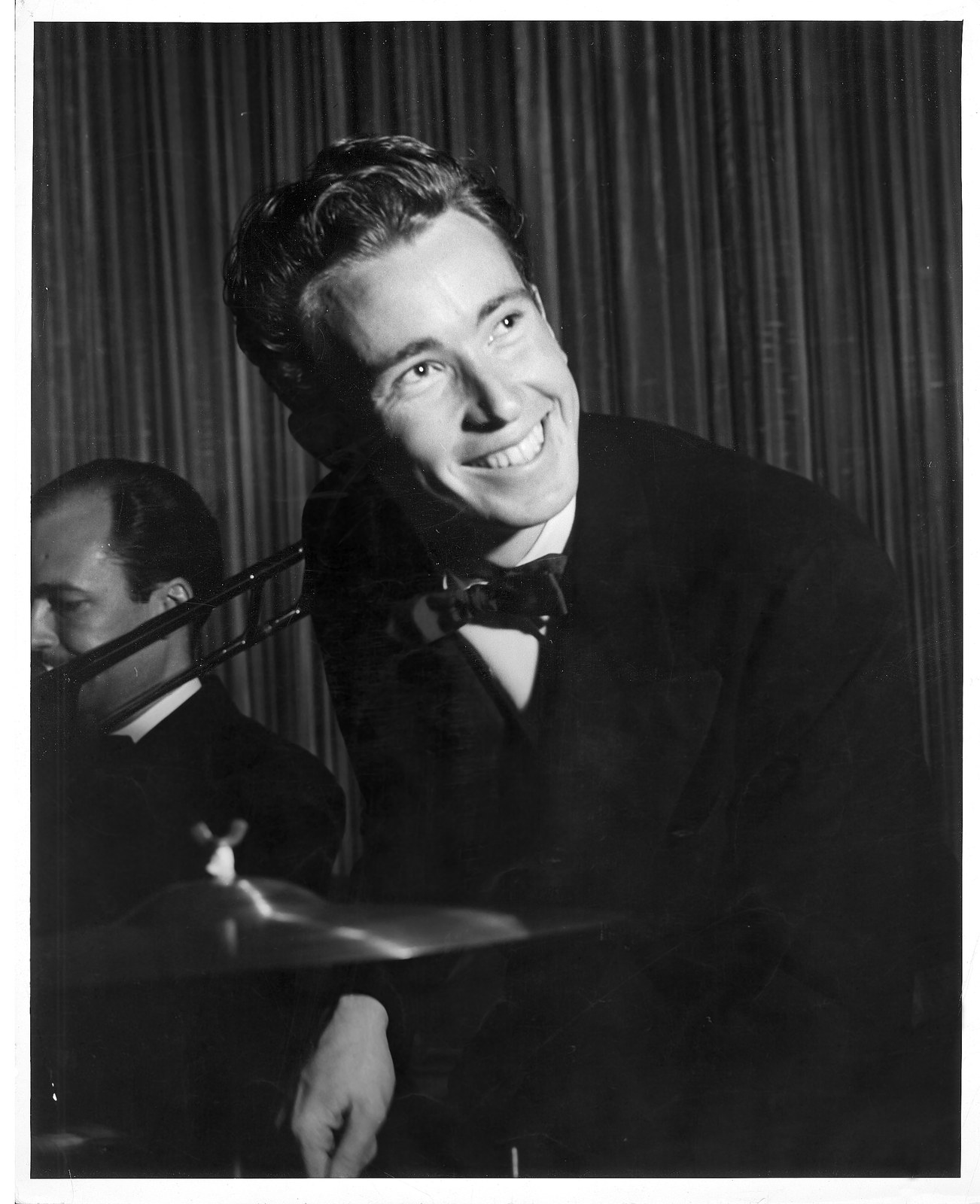
He first came to Seattle in 1955, and in 1961 he moved the family up for good. He became one of the drummers who built this city’s jazz scene — the first-call player everyone hired, and the teacher hundreds of drummers came to study with. Some of his students are still teaching from photocopies of his handwritten lessons.
He died in 1989, when I was eleven.
The other half of him
The whole time he was playing, he was painting. Not as a hobby beside the music — he thought of them as the same thing:
“Take a line of music, for example. What the artist adds to it or leaves out of it can be as important as what was originally there… I find that for me, at least, art and music interacts.”
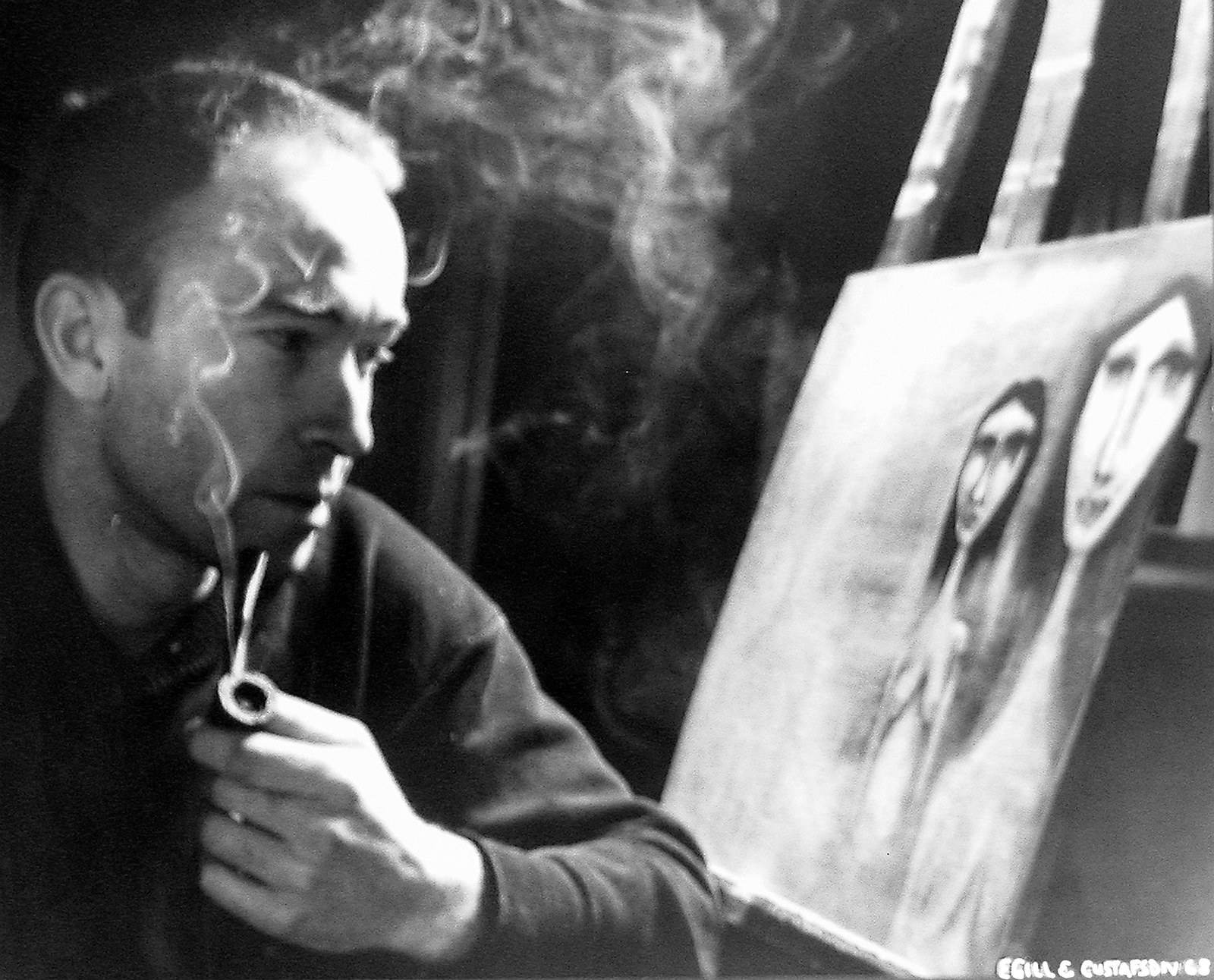
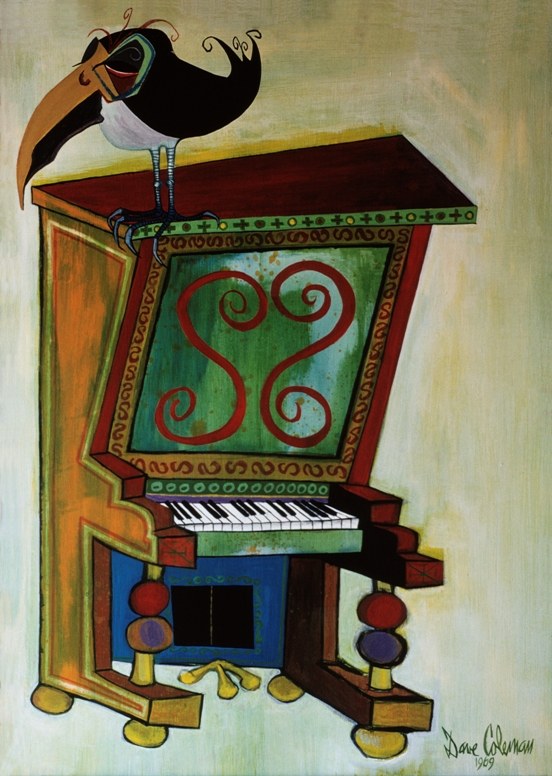
You can see it in the work. Almost every painting is one bird, built from a handful of confident shapes with everything unnecessary left out — the same instinct a drummer uses deciding what not to play. And he had a musician’s sense of humour about it. One of them is called You Can Bill Me. Another is a bird standing on top of a piano.
What he gave me
I didn’t set out to paint birds. For a long time I painted florals and abstracts. The birds arrived sideways — I painted a face one afternoon, gave it a ridiculous beak, and stopped cold, because I knew exactly whose bird I’d just painted.
Put his beside mine and you can see what came down:
- The beak — always too big, always the thing your eye lands on first.
- The eyes — heavy-lidded, half amused, ringed in a colour that has nothing to do with any real bird.
- The legs. His birds stand on striped legs with little spirals at the joints. So do mine. I didn’t decide to do that.
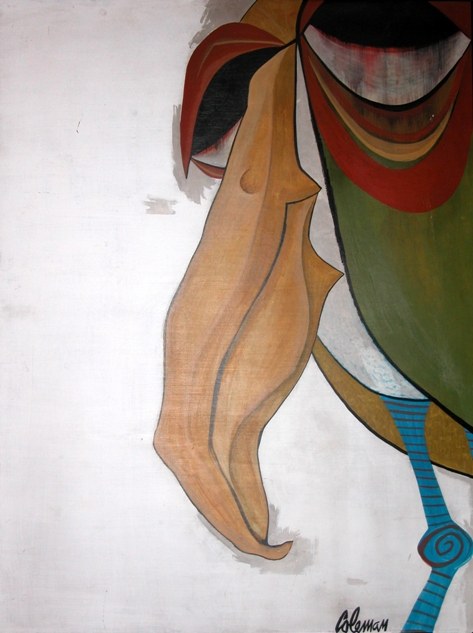
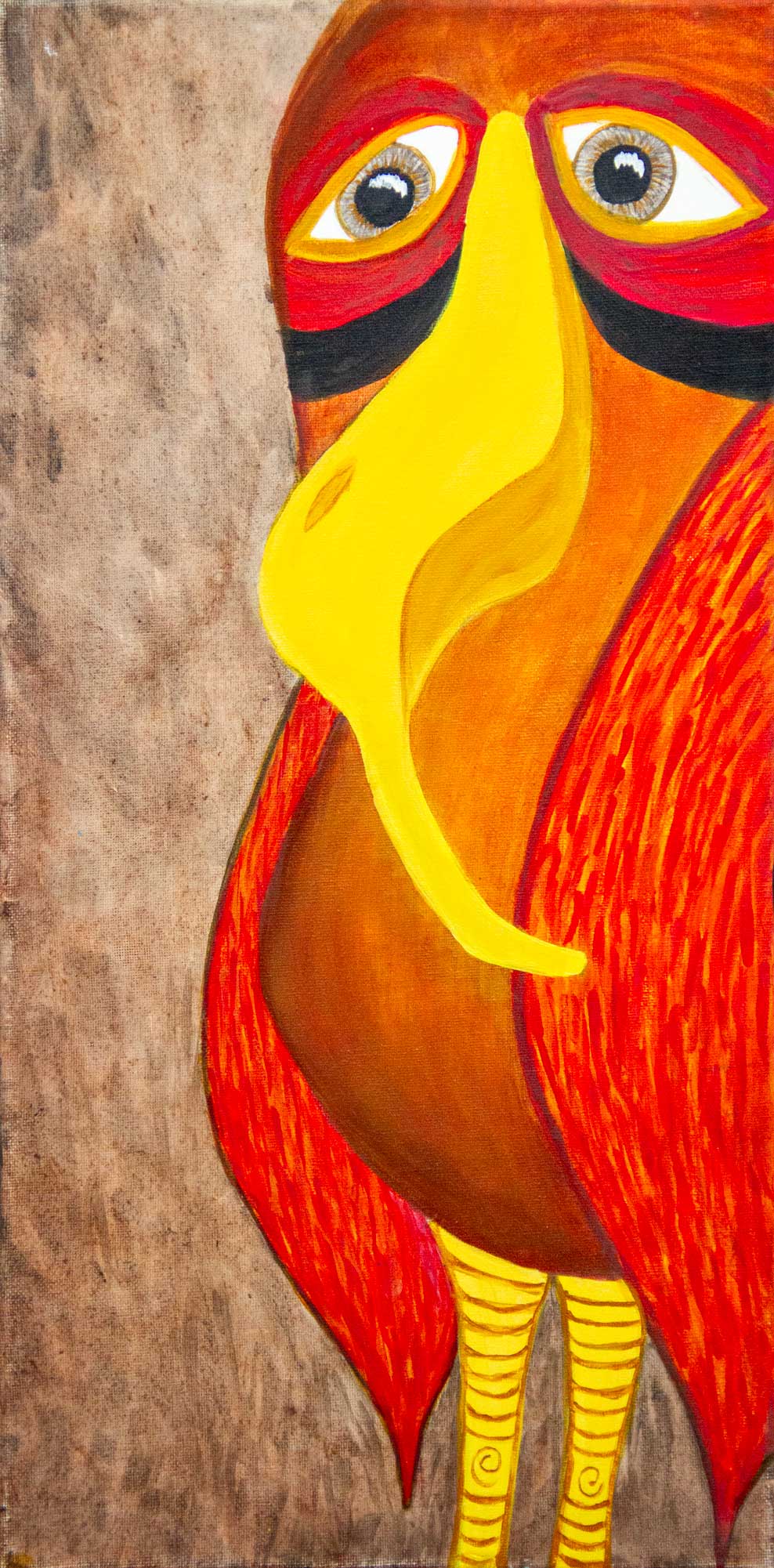
Mine are louder than his, and looser, and they turn up on tall skinny canvases he never would have chosen. But I’m painting with his hands as much as my own.
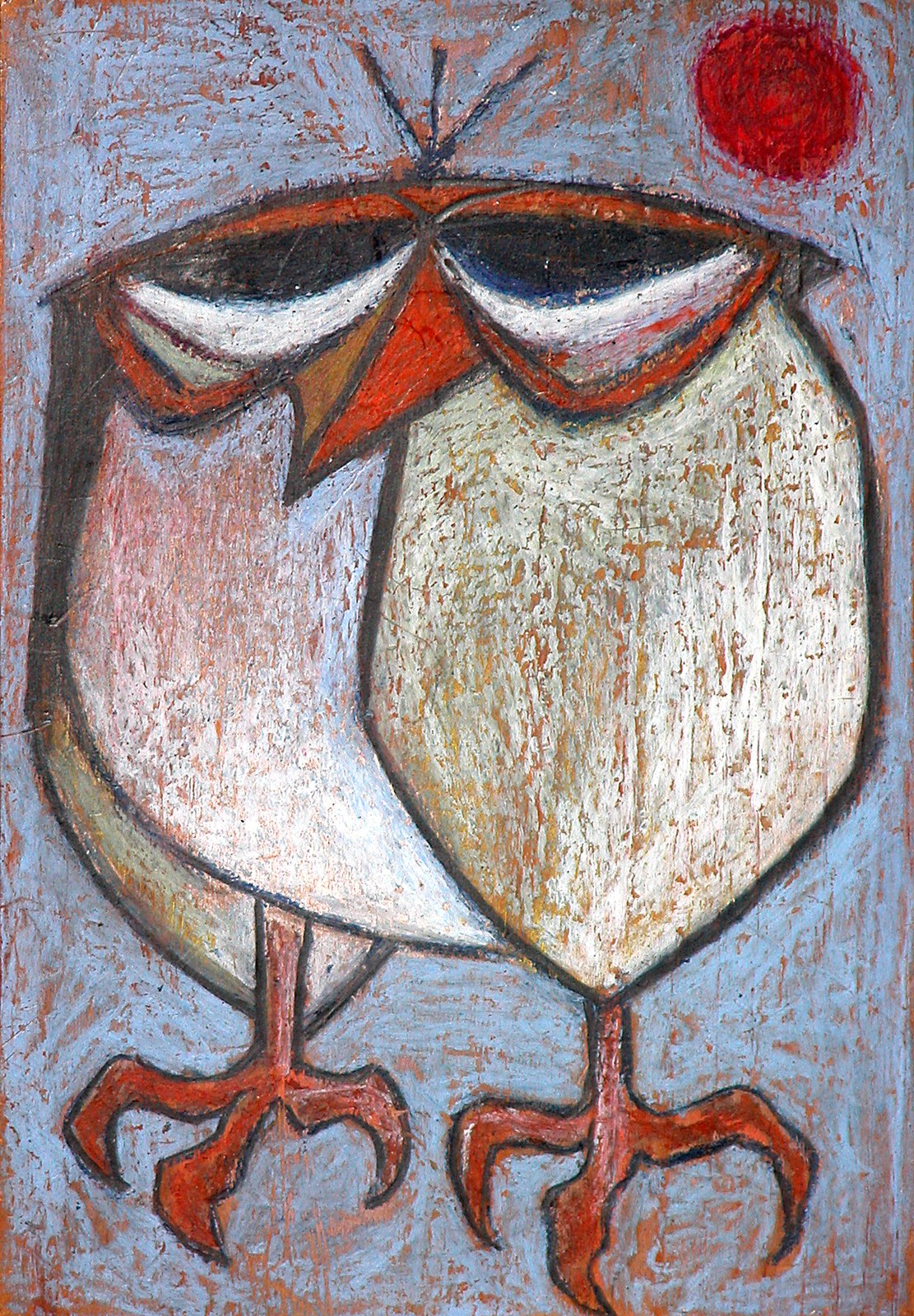
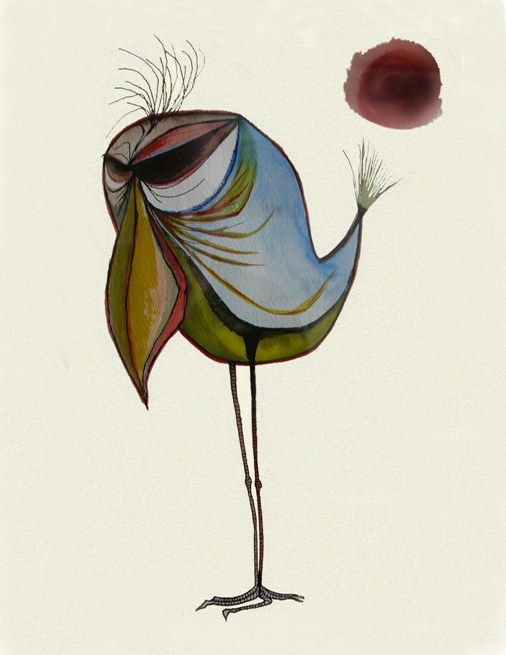
Two more of his.
The flock
Seventeen so far, and they’ve started behaving like a family. Chester is the loud one. Percival Featherton looks like he just woke up and isn’t impressed. George has clearly had a day. Rodger wears a crown of gold curlicues and seems to know it.
They come in four sizes now, from 8×10 up to the big 16×20 statement birds.
His paintings
His work spent thirty-five years in family houses where almost nobody could see it. Archival prints of a first few pieces are now available here — the jazz portraits, the birds, and the strangest unicorn you will ever meet.
If you knew him — played with him, studied with him, or have one of his paintings on your wall — I would truly love to hear from you. Send me a message.